Renter Guide · 11 min read
Purpose-Built Rental vs Condo Rental in Vancouver: A 2026 Renter's Guide
They can look the same on a listing. The difference shows up after you move in: who fixes things, whose rules you live by, and whether the owner can take the home back.

Key takeaways
- A purpose-built rental is a whole building owned and run as rental housing. A condo rental is one person's unit inside a strata building.
- In a rental building with five or more units that isn't strata-titled, BC doesn't let an owner or a buyer end your tenancy to move in. In a condo they can, with three months' notice.
- The same rent increase limit covers both: 2.3% in 2026 and 2.2% in 2027.
- Condo tenants live by the strata's bylaws as well as their lease, so pets, move-ins and some repairs need the strata's say too.
- Across Metro Vancouver, a rented condo two-bedroom averaged $2,900 in October 2025 against $2,363 in a purpose-built building. New buildings sit above that average.
On this page
Scroll through rentals in Vancouver and you'll see two kinds of apartment listed side by side. One is a condo that somebody bought and now rents out. The other is a home in a building that was built to be rented and has only ever had renters in it.
The photos rarely tell you which is which. Both have stone counters and in-suite laundry, and sometimes they're on the same block. The differences are in the parts of renting you only notice later: who you call when the dishwasher leaks, which rules you've signed up for, and what happens if the owner's plans change.
Neither one is automatically the better choice. Here's how they actually compare, including the cases where a condo wins.
The short version
| Purpose-built rental | Condo rental | |
|---|---|---|
| Who owns it | One owner for the whole building, usually a company | The person who owns that one unit |
| Who you deal with | The building's leasing and management team | The owner, or a property manager they hire |
| Repairs | One team, inside your home and out | The owner for your unit, the strata for the building |
| Rules you follow | Your tenancy agreement and the building's rules | Your tenancy agreement plus the strata's bylaws and rules |
| Pets | One building-wide policy | The strata's bylaws and the owner both have to allow it |
| Owner or buyer moves in | Not allowed in non-strata buildings with 5+ rental units | Allowed, with three months' notice |
| Rent increases | 2.3% cap in 2026, 2.2% in 2027 | Same cap |
| Average two-bedroom rent, Metro Vancouver, Oct 2025 | $2,363 | $2,900 |
What purpose-built rental actually means
A purpose-built rental is an apartment building designed, financed and operated as rental housing. One owner holds the whole building, the homes are never sold off individually, and a management team runs it day to day. A new one is usually marketed under its own name, with a leasing office, published rents and a list of amenities.
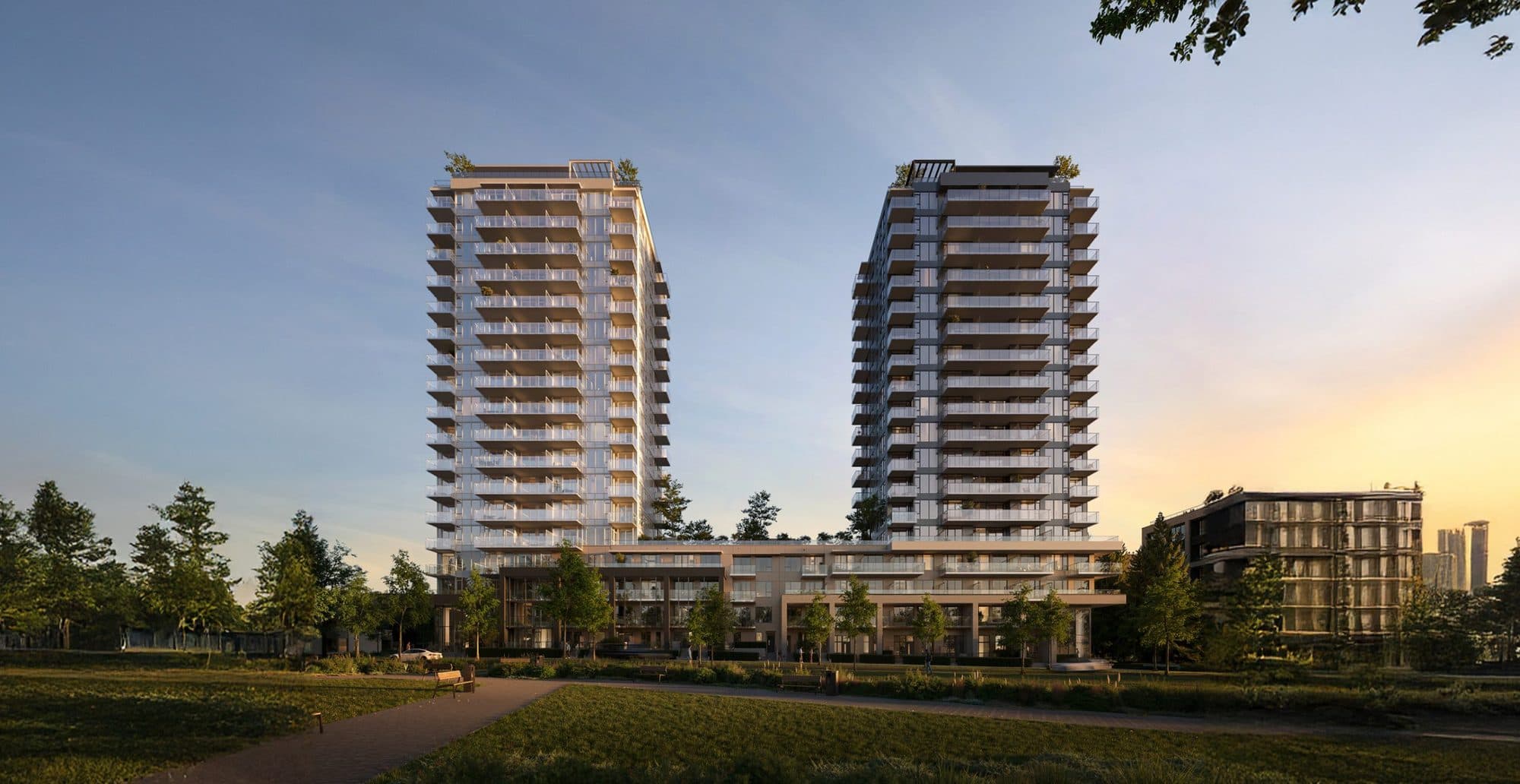
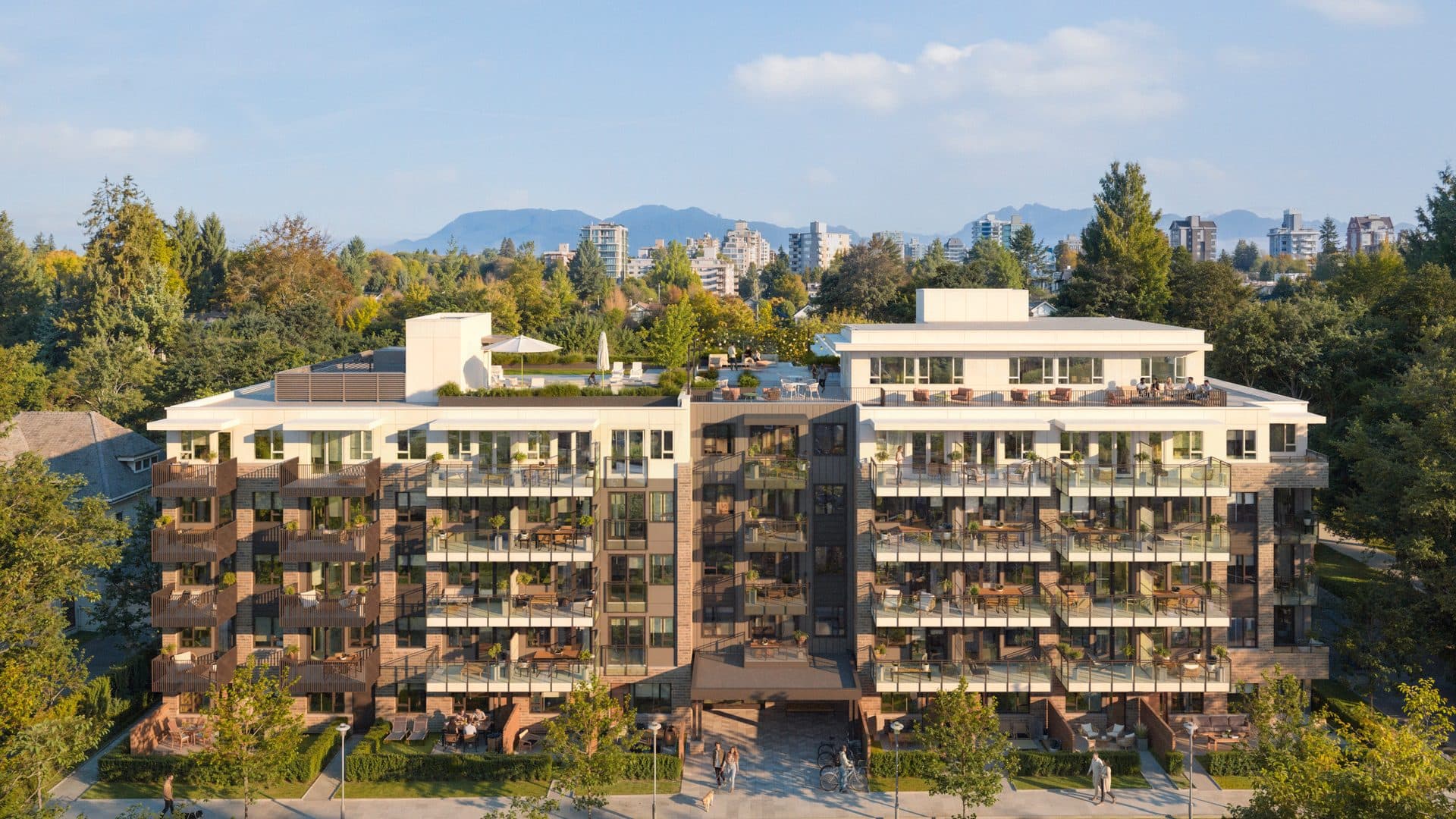
West 42 in Oakridge is a typical new example: two concrete towers with 426 rental homes between them, a few minutes from Oakridge–41st Avenue Station. Signal at Marine Gateway has more than 500 homes beside Marine Drive Station, and Westward brings the same idea to Kerrisdale.
Plenty of purpose-built rentals aren't new at all. The West End and Kitsilano are full of rental apartment buildings from the 1960s and 70s, run the same way, just with fewer amenities and often a shared laundry room.
A condo rental is a strata unit that someone owns privately. That owner is your landlord. The building is run by the strata corporation, which is all of the owners together, usually with a strata management company doing the paperwork. You live in the building, but you're not part of the strata, so your landlord sits between you and it.
Both are a big part of the market. In its October 2025 survey, CMHC counted about 127,000 purpose-built rental apartments in Metro Vancouver and about 107,000 condo apartments being rented out, roughly one condo in three.
Who you're really dealing with
In a purpose-built building, one team handles your lease, your rent, your repairs and the building itself. Signal, for instance, is managed on site by BGO Living and has a concierge in the lobby. When something's wrong, you know whose job it is.
In a condo, you have a relationship with your landlord, and your landlord has a relationship with the strata. Lots of condo owners are excellent landlords who reply the same day. Some live in another city or another country and hand everything to a property manager. You find out which kind you've got as you go.
This matters most when you need something from the building rather than your unit: an extra fob, a parking stall, a noise complaint, a booking for the moving elevator. In a condo, those requests tend to go through your landlord to the strata and back.
When something breaks
In a purpose-built rental, you put in a maintenance request and the management team deals with it, whether the problem is under your sink or in the parkade.
In a condo, it depends where the problem is. Your landlord has to keep your home in good repair and give you a number to call for emergencies. The strata corporation is responsible for common property, and under BC's standard strata bylaws that also covers the building's structure and exterior, balconies, and the doors and windows on the outside of the building, even where they're part of your unit. Each strata can change those bylaws, which is why the province's repairs guide says your landlord should tell you which repairs belong to the strata and how to report them.
Most of the time this works fine. Where it gets slow is the problem that crosses a line, like a leak from the unit upstairs. That can involve two owners, the strata and an insurer before anyone agrees who's fixing what, and you're the one living with the bucket in the meantime.
Strata bylaws, pets and moving in
If you rent a condo, the strata's bylaws and rules apply to you, not just to the owner. The strata can fine a tenant for breaking them. Before you move in, your landlord has to give you the current bylaws and rules and a Form K, which you sign to say you'll follow them. Read them before you commit. They cover pets, balcony barbecues, noise and move-in times, and they can change while you live there.
Pets are where condo renters get caught out, because you need two yeses. The strata's bylaws have to allow the animal, and the owner has to agree to it in your tenancy agreement. BC's standard strata bylaw allows one dog or one cat, and many stratas have written their own. It's common to find the right apartment and then learn the strata caps dogs by size, or that the owner would rather not.
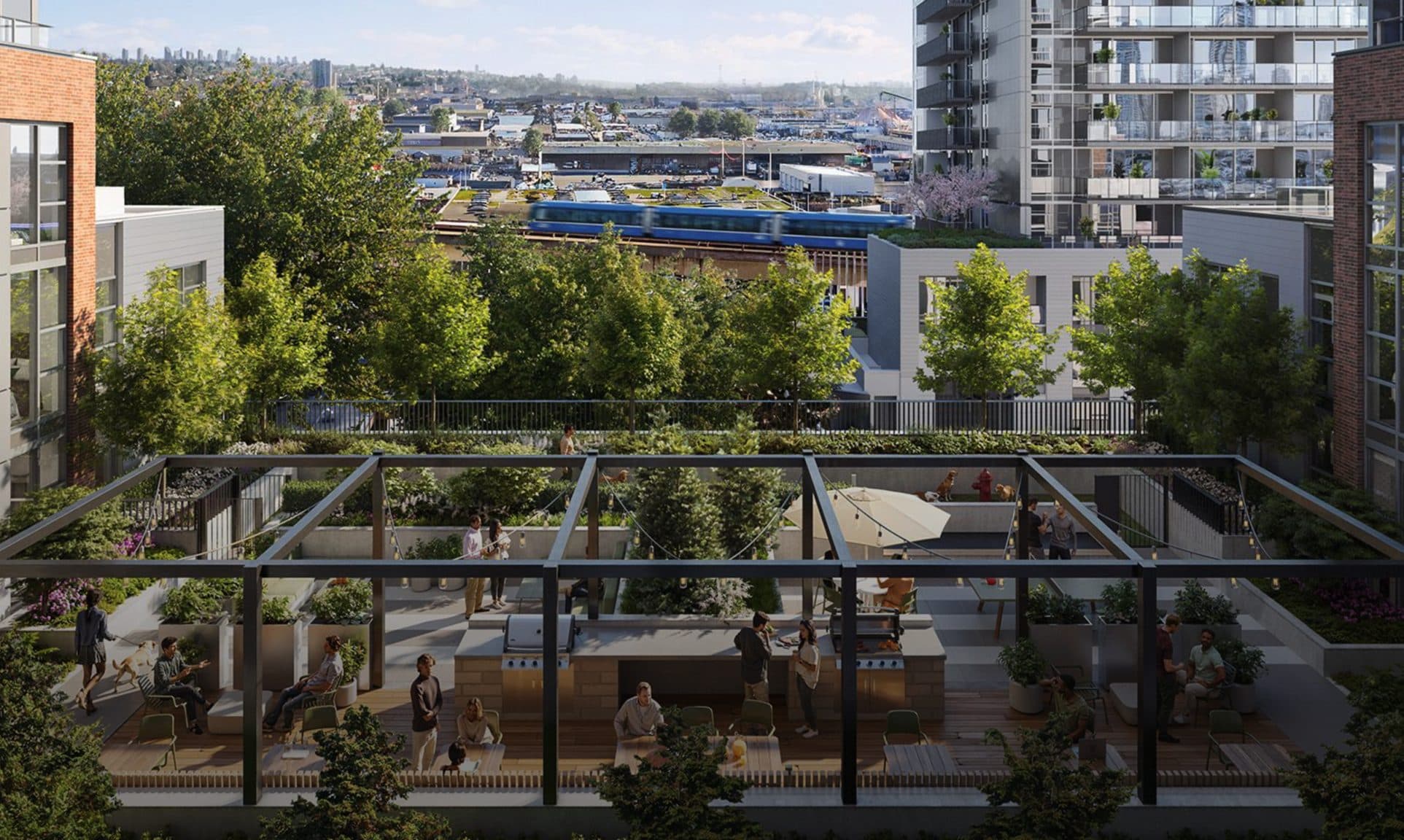
In a purpose-built building, there's one pet policy and the building sets it. Newer rentals often plan for pets from the start: Westward has a pup run and a wash station in its Paw Spa, and Signal has a pet run and a pet wash. Buildings still have limits on number, size or type, so ask the leasing team before you fall for a suite.
Either way, a landlord can ask for a pet damage deposit of no more than half a month's rent, however many pets you have. Guide and service dogs aren't pets under the law, so no pet rules or deposit apply to them.
Moving in is a little more involved in a condo, too. You'll book the elevator through the strata, and if the strata charges a move-in fee, your landlord is allowed to pass it on to you. There's no fixed maximum, but the fee has to be reasonable and written into the strata's bylaws or rules.
How secure is your home?
This is the difference most renters don't know about, and it's the one that matters if you want to stay put.
Both kinds of rental are covered by the same law, the Residential Tenancy Act. A landlord can't end your tenancy just because they'd like to, and selling the home doesn't end it either: the new owner simply becomes your landlord on the same terms.
What the Act does allow is ending a tenancy so the owner, or a close family member, can move in. Close family means a parent, spouse or child, or a spouse's parent or child. A buyer can use the same reason once the sale's conditions are met and they ask the seller in writing. In either case you get:
- three months' notice, and 21 days to dispute it
- a notice generated through the government's online tool, not a handwritten letter
- one month's rent as compensation
If the owner or buyer doesn't actually live there for at least 12 months, they can owe you another 12 months' rent, unless there were extenuating circumstances. The province lays out every step on its types of evictions page.
Here's the part that separates the two kinds of rental. Since April 2024, a landlord can't give that notice, for their own use or a buyer's, if the building has five or more rental units and either isn't strata-titled or has every rental unit owned by the same owner. That describes nearly every purpose-built apartment building. And a company that owns a rental building couldn't use that reason anyway, because only an individual or a small family company can move into a suite.
In a condo, that door stays open. An owner whose child is starting university nearby, or who's selling to someone who wants to live there, can still ask you to leave.
A purpose-built landlord isn't frozen, though. The building can be demolished or converted, which takes four months' notice. A renovation so major the suite has to be empty needs an order from the Residential Tenancy Branch first, and in a building with five or more units you can tell the landlord, before you leave, that you want to move back in once the work is done. In a building that's a year or two old, none of that is a realistic worry.
So if you're planning to stay three or five years, maybe to keep a child in the same school, who owns the building deserves as much thought as the kitchen.
Rent and what you'll actually pay
Rent increases work the same way in both. A landlord can raise the rent once every 12 months, with at least three months' written notice on the government form, and by no more than the yearly limit: 2.3% in 2026 and 2.2% in 2027.
The starting rent is where they differ. Across Metro Vancouver, CMHC's October 2025 average for a two-bedroom was $2,363 in purpose-built rentals and $2,900 in rented condos. Don't read too much into that gap. The purpose-built average includes decades-old buildings, and a brand-new rental building will usually cost more than the average for its neighbourhood.
New buildings tend to publish their rents and offer incentives while they fill up. Westward, for example, is offering one month free on select homes with a 12-month lease. A condo's rent is whatever one owner decides, which can cut both ways: some owners will negotiate, and some have a mortgage to cover and won't move at all.
You also have more room to shop around than you've had in a long time. CMHC put Metro Vancouver's purpose-built vacancy rate at 3.7% in October 2025, the highest since 1988.
Whichever you're looking at, compare the full monthly cost, not just the rent: parking, storage, internet and utilities. Westward includes internet with every home, and plenty of condos don't.
When a condo rental is the better choice
A condo can be exactly the right call. It often is when:
- You want a particular building or area that has little purpose-built rental. Most of the towers in Yaletown and Coal Harbour, for example, are condos.
- Finishes or space matter most to you. Condos were built for buyers, and some owners have renovated. Bigger layouts, including three bedrooms, are often easier to find as condos.
- You'd rather deal with one person than a company. A good owner can be more flexible about small things.
- You're only staying a year or so. Tenancy security matters less if you're moving on anyway.
Questions to ask before you sign
For a condo:
- Do you, or anyone in your close family, plan to move in over the next few years? Are you thinking of selling?
- Who handles repairs, and who do I call after hours?
- Can I read the strata bylaws and rules now, and do they allow my pet?
- Is there a strata move-in fee, and how do I book the elevator?
For a purpose-built rental:
- Is the management team on site, and how do maintenance requests work?
- What are the pet limits, exactly?
- What do parking and storage cost, and is there space for my layout?
- What's the current incentive, and what are the conditions?
If you're comparing buildings on Suited, our AI leasing assistant can answer most of these for each building, at any hour, and set up a viewing when you're ready.
Frequently asked questions
Can my landlord end my tenancy if they sell the condo?
Not just by selling. Your tenancy carries on with the new owner. If the buyer, or a close family member of theirs, is going to live in the unit, the buyer can ask the seller in writing to give you notice once the sale's conditions are met. You'd get three months' notice, 21 days to dispute it, and one month's rent as compensation.
Can a purpose-built rental building evict me so the owner can move in?
Almost never. Since April 2024, BC hasn't allowed notices for a landlord's own use or a buyer's use in buildings with five or more rental units that aren't strata-titled, or where one owner holds every rental unit. A company that owns a building can't use that reason in any case.
Do rent increase limits apply to both purpose-built rentals and condos?
Yes, the same limit covers both: 2.3% in 2026 and 2.2% in 2027. A landlord can raise the rent once every 12 months, with at least three months' written notice on the government form.
Do I have to follow strata bylaws if I rent a condo?
Yes. Tenants are bound by the strata's bylaws and rules, and a strata can fine a tenant for breaking them. Your landlord has to give you the current bylaws and rules, and a Form K to sign, before you move in.
Is a purpose-built rental cheaper than a condo rental in Vancouver?
On average, yes. CMHC's October 2025 survey put the average two-bedroom at $2,363 in a Metro Vancouver purpose-built rental and $2,900 in a rented condo. That average includes a lot of older buildings, though, and brand-new rental buildings usually cost more, so compare specific homes.
How can I tell if a listing is a purpose-built rental?
Look at who's advertising it. A purpose-built building is usually marketed under its own name, with a leasing office, a management company and rents for several homes at once. A condo listing is a single unit posted by the owner, a property manager or a realtor, and it usually mentions the strata. If you're not sure, ask who owns the building.